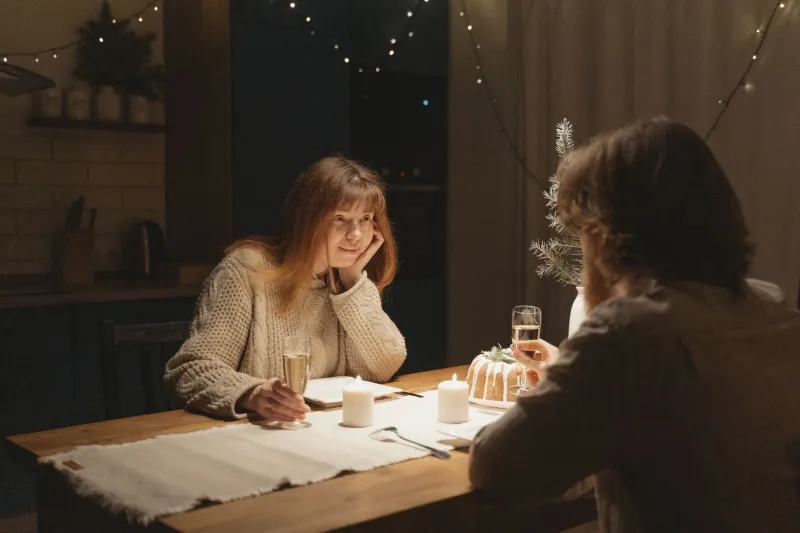
Ditch the Relationship Scoreboard: What Happens When You Stop Measuring Love Against Everyone Else's
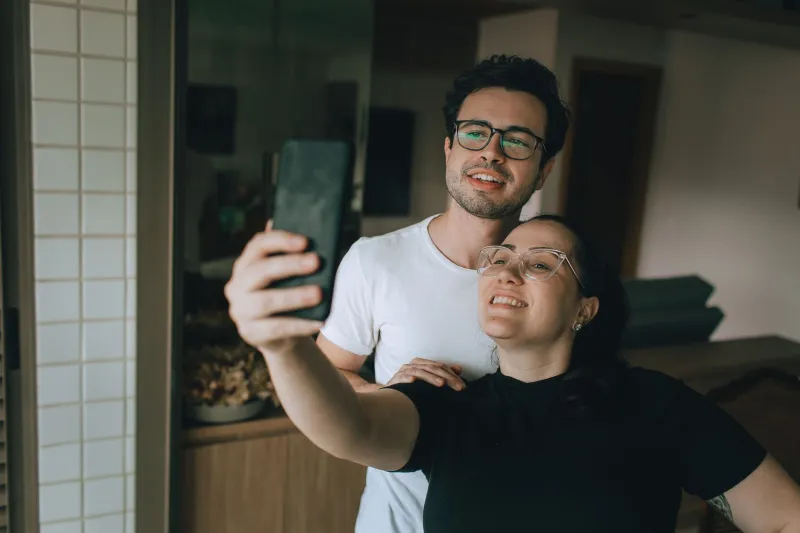
The Feed Is Lying to You — and You Already Know It
Somewhere between the third engagement announcement of the month and a reel of a couple slow-dancing on a rooftop at golden hour, something quietly shifts. You glance over at your partner — maybe they're eating cereal in yesterday's shirt, maybe they're half-watching a documentary you both picked as a compromise — and a little voice asks: Is this enough? Are we enough?
Here's the thing: that voice isn't yours. It's borrowed. It's a composite of every curated moment you've consumed, every relationship "goals" post you've double-tapped, every think piece about what modern love is supposed to look like. And it's doing serious damage to partnerships that are, by any honest measure, genuinely thriving.
Comparison culture didn't invent relationship insecurity, but it gave it a 24/7 broadcast schedule. And the longer we let external aesthetics define internal worth, the more we erode the very intimacy we're supposedly trying to protect.
Why Performative Partnership Is Such a Trap
Social media has a specific effect on how we perceive relationships: it flattens them. A ten-year partnership with real depth, hard conversations, and genuine repair gets compressed into a birthday caption and a beach photo. What you're seeing is the highlight reel — the 0.1% of someone's relationship that made it to post — and your brain, wired to compare, treats it as representative data.
Psychologists call this social comparison theory, and it's not a new concept. But the volume and velocity at which we're now exposed to other people's lives makes the effect far more acute. We're not comparing ourselves to our neighbors anymore. We're stacking our Tuesday nights against the curated best moments of thousands of couples, filtered and captioned for maximum impact.
The result? A kind of low-grade relationship anxiety that's hard to name because it doesn't come from anything actually wrong. Your partner is kind. The relationship is stable. But it doesn't look like that. And somehow, that starts to feel like a problem.
It isn't. But convincing yourself of that takes some deliberate work.
The Psychological Cost of Measuring Love in Likes
When couples start performing their relationship for external validation — posting to prove, not to share — something subtle but significant shifts. The relationship stops being a private, evolving thing between two people and becomes a product. And products need to meet market expectations.
You start staging moments rather than living them. You pick the restaurant that photographs well over the one you actually love. You hold off on having the difficult conversation because it doesn't fit the narrative you've built online. The gap between the relationship you're presenting and the one you're actually living quietly widens.
Over time, that gap becomes exhausting. And the irony is brutal: in trying to look like you have a great relationship, you slowly undermine the conditions that make a relationship actually great — honesty, presence, the willingness to be fully seen in the unsexy moments.
Building Your Own Definition of "Enough"
So what does a healthy relationship actually look like when you strip away the external noise? The answer is inconveniently personal. There's no universal template, which is exactly why comparison is such a hollow exercise.
For some couples, success looks like weekly adventures and spontaneous road trips. For others, it's a shared routine so comfortable it borders on sacred. Some people need constant verbal affirmation. Others feel most loved in total silence on the couch. None of these configurations are objectively better — they're just different, and what matters is whether the people inside the relationship feel genuinely met.
Try asking yourself — and your partner — these questions, not as a quiz but as a real conversation:
- Do I feel safe being honest here? Not just about the big stuff, but about the small, weird, inconvenient truths.
- When I'm struggling, is this the person I want in my corner? Not the person I want to photograph with, but the one I want present.
- Are we growing in directions that still make sense together? Not identically, but compatibly.
- Do I feel more like myself in this relationship, or less?
These aren't glamorous questions. They won't make a compelling Instagram caption. But they're the ones that actually tell you something real.
Practical Ways to Quiet the Comparison Noise
Knowing comparison is corrosive and actually stopping it are two very different challenges. Here are some concrete ways to start shifting the dynamic:
Audit your feed with intention. Unfollow or mute accounts that consistently make you feel inadequate — even if you genuinely like those people. Your mental diet matters. You wouldn't eat something that reliably made you feel sick just because it looked good on the plate.
Create rituals that belong only to you two. The more you invest in experiences that are private, inside-joke-level specific to your relationship, the less you'll feel the pull to measure yourself against a generic ideal. Your weird Sunday morning tradition, the playlist that's just yours, the shorthand no one else would understand — these are the actual texture of intimacy.
Talk about the comparison trap directly. Naming it out loud with your partner takes away some of its power. "I saw something online that made me feel weirdly insecure about us — can we talk about it?" is a far more connecting conversation than silently stewing.
Celebrate privately. Not every milestone needs a post. Some of the most meaningful relationship moments are the ones that stay between two people — not because you're hiding anything, but because some things don't need an audience to matter.
Check in on satisfaction, not optics. Make it a habit to ask each other how you're actually feeling about the relationship, not how it looks from the outside. Regular, low-stakes check-ins create a culture of honesty before issues become crises.
The Quiet Confidence of Knowing What You Have
There's something genuinely powerful about a couple that has stopped looking sideways. They're not performing. They're not competing. They've done the quiet, unglamorous work of figuring out what they actually need from each other — and then building that, imperfectly and continuously, without waiting for external confirmation that they're doing it right.
That kind of relationship doesn't usually go viral. It doesn't generate content. But it generates something far more valuable: a real sense of being known, chosen, and at home with another person.
The highlight reel will always be there, waiting to make you feel like you're behind. The antidote isn't perfecting your own reel — it's deciding, firmly and repeatedly, that you're not interested in the competition.
Your relationship isn't a performance. Stop directing it like one.