Cracks in the Armor: Why Showing Your Imperfect Self Is the Hottest Thing You Can Do
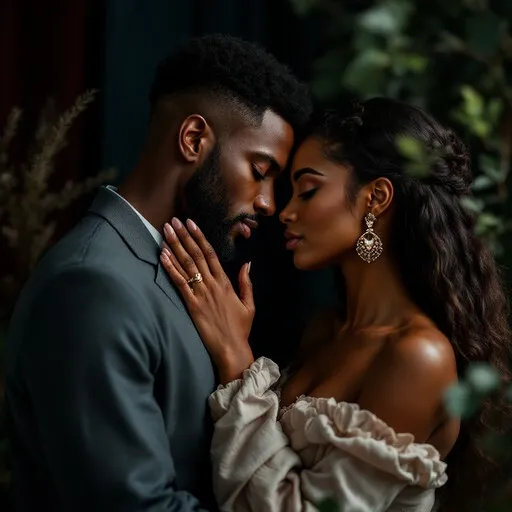
Photo: couple intimate honest conversation vulnerability connection, via images.stockcake.com
We've been sold a story about attraction for a long time. Look confident. Have your life together. Don't text first. Act like you need no one. The whole playbook is basically a manual for emotional inaccessibility — and somehow we've been treating it like gospel.
But something is shifting. The people who seem most magnetic these days aren't the ones with the flawless Instagram aesthetic or the rehearsed answer to "so, what do you do?" They're the ones who'll admit they're still figuring it out. The ones who say I don't know without flinching. The ones who let you see the seams.
There's a name for what they're doing, and it's not weakness. It's vulnerability — and the psychology behind it is a lot more seductive than anyone gave it credit for.
The Armor We Wear (And What It Actually Costs Us)
Most of us built our emotional defenses for good reason. Life has a way of teaching you that openness gets punished — a confession met with ridicule, a soft moment turned into ammunition, a heart offered and handed back in pieces. So you learn to armor up. You get good at performing okay.
The problem is, armor doesn't just keep hurt out. It keeps connection out too.
When you walk into a relationship — or even a first date — behind a wall of curated confidence and careful deflection, you're not actually showing up. You're sending a representative. And while that representative might be impressive, they're not particularly knowable. And people, it turns out, are desperate to know someone. Really know them.
Psychologists call this the "beautiful mess effect" — a phenomenon where people consistently rate vulnerability as more attractive and courageous in others than they perceive it to be in themselves. We're terrified to show our uncertainty, but we're quietly relieved and drawn in when someone else does.
Vulnerability Isn't the Same as Oversharing
Let's clear something up, because this distinction matters enormously: being vulnerable is not the same as unloading your entire trauma history on a second date.
Oversharing is often anxiety wearing the costume of openness. It floods the room, creates pressure, and can actually push people away — not because the content is too real, but because it doesn't leave space for the other person. It's a monologue masquerading as intimacy.
Genuine vulnerability is something quieter and more precise. It's admitting you're nervous about something without turning it into a therapy session. It's saying this matters to me without demanding a particular response. It's letting someone see a real corner of you — not the whole cluttered house at once.
Think of it like good lighting. You're not hiding. You're just being intentional about what you reveal and when. The goal isn't exposure for its own sake — it's invitation. You're creating an opening for the other person to meet you there.
Why Imperfection Signals Safety
Here's the counterintuitive part: when someone shows you their uncertainty, their awkwardness, their still-healing edges, it doesn't make you trust them less. It usually makes you trust them more.
That's because perfection is, at some level, alienating. When someone seems to have no rough edges, no doubts, no moments where they're just winging it — you can't quite locate yourself in relation to them. There's nowhere to land. The connection stays surface-level because there's no real ground to stand on together.
Imperfection, on the other hand, is relatable. It says: I am a person who experiences things, not a highlight reel. And that realness creates psychological safety — the sense that you don't have to perform either. That's when things get genuinely intimate.
In long-term relationships especially, the couples who tend to stay close are the ones who've developed a shared language around their vulnerabilities. They know each other's soft spots — not to exploit them, but because they've been trusted with them. That kind of knowing is its own form of deep, enduring attraction.
The Courage It Actually Takes
None of this is easy to put into practice, and it'd be dishonest to pretend otherwise. Letting your guard down in a culture that rewards emotional self-sufficiency is a genuine act of courage. It requires tolerating the discomfort of not knowing how someone will respond — and doing it anyway.
It also requires a certain amount of self-trust. You have to believe that your real self — the uncertain, still-becoming, imperfect version — is worth showing. That's not a small thing. For a lot of people, it's the work of years.
But here's what tends to happen when you start practicing it in small doses: the right people lean in. The ones who are scared off by your realness were probably never going to give you the connection you actually wanted anyway. And the ones who stay? They tend to stay hard.
Making the First Move Toward Openness
You don't have to overhaul your entire emotional operating system overnight. Vulnerability, like any meaningful skill, is built incrementally.
Start with low-stakes honesty. Tell someone you're nervous about something. Admit when you don't have the answer. Share an opinion you're not totally sure about yet. Let yourself be caught caring about something that might seem uncool.
Pay attention to how it lands — not just with the other person, but inside yourself. There's often a kind of relief that follows a moment of genuine openness. A loosening. Like you've been holding your breath and finally remembered you're allowed to exhale.
That feeling? That's connection doing its work.
The Pulse of It
The most desirable version of you isn't the most armored one. It's the most present one — the one willing to be seen without the performance, to admit the uncertainty without apology, to show up as a full human being rather than a carefully managed impression.
There's a reason the people who move us most aren't the ones who seem untouchable. They're the ones who let us in. Who showed us a crack in the wall and trusted us to walk through it gently.
That kind of courage is quietly, deeply magnetic. And it starts the moment you decide the real you is worth the risk.